


California Cannabis Co-Packing Services: How to Scale Your Brand With a Licensed Partner
California Cannabis Co-Packing Services: How to Scale Your Brand With a Licensed Partner
Key Takeaways
- For cannabis co packing California brands can trust, the right licensed partner turns your inputs and packaging into compliant, shelf ready products without the cost of building a facility.
- The products most commonly co-packed in California are flower, standard and infused pre-rolls, concentrates, and vape cartridges, each with its own packaging workflow and compliance requirements.
- Standard co-packing turnaround is 3 to 4 weeks. Brands that arrive with compliant label artwork, packaging, and inputs ready stay on that schedule, while missing materials are the most common cause of delays.
- A qualified California co-packer builds compliance into every run, including Metrc tracking, compliant packaging and labeling, batch records, and testing coordination. The brand still owns its label claims and its distribution plan.
- The right co-packing partner is chosen on consistency, compliance workflow, communication, and capacity, not on price alone.
Why California Brands Are Turning to Co-Packing
Building a licensed cannabis manufacturing operation in California is expensive and slow. A facility build out, local and state licensing, equipment, trained production staff, and a compliance team all have to be in place before a single unit ships.
For most brands, that investment does not make sense. The brand’s real advantage is its product vision, its consumer relationships, and its retail sell through. Production is a capability it needs, not a business it wants to run.
That is the gap cannabis co-packing fills. A licensed California co-packer takes the brand’s inputs, packaging, and specifications and turns them into compliant, shelf ready products under the brand’s own name.
This guide covers what can be co-packed, how a co-packing workflow runs from intake to release, how fast turnaround really is, what compliance is included, and how to evaluate a California co-packing partner before you commit.
What Is Cannabis Co-Packing?
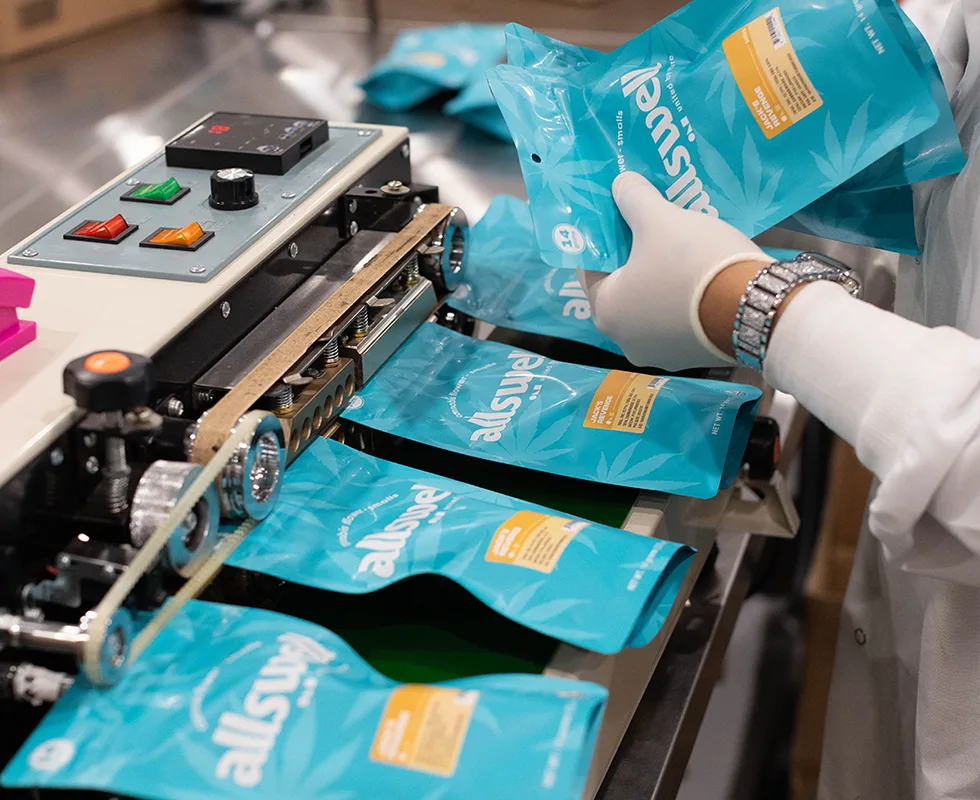
Cannabis co-packing is a contract manufacturing arrangement in which a licensed facility produces, packages, and labels cannabis products on behalf of a brand. The brand owns the product identity. The co-packer owns the production process.
In a typical California co-packing arrangement:
- The brand supplies or sources its inputs, such as flower, oil, or concentrate, and provides its packaging and label artwork
- The co-packer receives inputs into Metrc, inspects them, and confirms product specifications
- The co-packer produces and packages finished goods under its California manufacturing license
- Finished products are documented, batched, and prepared for testing and transfer to a licensed distributor
- The distributor moves product to licensed retailers, where it is sold under the brand’s name
Because production happens under the co-packer’s license, the brand does not need its own manufacturing license to bring products to market this way.
Co-Packing vs. White Label vs. Private Label
These terms are often used interchangeably, but they describe slightly different arrangements:
| Model | How It Works |
| Co-Packing | The brand provides its own inputs and specifications. The co-packer handles production and packaging to the brand’s exact requirements. |
| White Label | The manufacturer supplies a proven product that the brand packages under its own label. Faster to launch, less formulation control. |
| Private Label | A retailer, such as a dispensary, launches a house brand produced by a manufacturing partner and sold on its own shelves. |
Many brands use a mix of all three as they grow. A licensed facility that offers each model gives a brand room to start simple and add control over time.
What Products Can Be Co-Packed in California?
Most major cannabis product categories can be co-packed through a licensed California facility. The right category to start with depends on your brand positioning, your input supply, and where you see retail demand.
Flower
Flower co-packing takes bulk flower and turns it into retail ready units: eighths, quarters, halves, and ounces in jars, mylar bags, or tins. The co-packer handles weighing, filling, sealing, labeling, and batch documentation.
Flower is the most accessible entry point for new brands because it requires no formulation. Consistency is the critical variable. Accurate fill weights, careful handling to protect trichomes, and moisture control at packaging all affect how the product looks and performs on the shelf.
Pre-Rolls and Infused Pre-Rolls
Pre-rolls are one of the highest demand categories in California retail and one of the most popular co-packing categories. A co-packer can produce singles, multipacks, and dogwalkers in a range of cone sizes and paper types.
Infused pre-rolls add a concentrate layer, such as kief, live resin, diamonds, or distillate, for a premium product with higher margin potential. Infusion requires precise dosing and consistent application, which is where an experienced co-packing team makes a visible difference.
Concentrates
Concentrate co-packing covers filling and packaging rosin, live resin, badder, sauce, diamonds, and similar products into compliant jars and containers. Concentrates are sensitive to temperature, handling, and exposure, so packaging workflows need to protect texture and terpene content from intake through sealing.
Vape Cartridges and Disposables
Cart filling places distillate, live resin, or other oils into cartridges or all in one devices, followed by capping, packaging, and labeling. Hardware selection, fill accuracy, and leak prevention are the variables that matter most for consumer experience and return rates.
| Product Category | What Co-Packing Typically Covers |
| Flower | Weighing, filling, sealing, and labeling bulk flower into jars, bags, or tins across standard retail sizes |
| Pre-Rolls | Grinding, cone filling, compaction, twisting or capping, and packaging singles and multipacks |
| Infused Pre-Rolls | Pre-roll production plus concentrate application with controlled dosing for premium formats |
| Concentrates | Filling and sealing rosin, resin, badder, sauce, and diamonds into compliant containers |
| Vape Cartridges | Cart filling, capping, and packaging for distillate, live resin, and specialty oils |
| Compliance Packaging | Child resistant packaging, universal symbol, government warning, and batch labeling applied to finished goods |
How a Co-Packing Workflow Runs From Intake to Release
Every co-packing run follows a structured workflow. Understanding each stage helps brands prepare the right materials and avoid the delays that come from missing information.
| Workflow Stage | What Happens |
| Onboarding and Specs | Product specifications, packaging formats, label artwork, and run quantities are confirmed in writing |
| Input Intake | Flower, oil, or concentrate is received into Metrc and logged against the brand’s production order |
| Quality Inspection | Inputs are inspected for condition, weight, and any issues that could affect the finished product |
| Production | Products are made to spec: filled, rolled, infused, or dispensed according to the confirmed run plan |
| Packaging and Labeling | Finished goods are packaged in compliant containers and labeled with batch and compliance information |
| Batch Reconciliation | Weights, unit counts, and Metrc packages are reconciled so inventory matches records exactly |
| Testing and Release | Samples are pulled for laboratory testing and product is prepared for transfer to a licensed distributor |
Packaging Workflows That Keep Product Shelf Ready
Packaging is where many brands underestimate the work involved. A strong co-packer treats packaging as its own production discipline, not an afterthought at the end of the line. Look for packaging workflows that include:
- Packaging and label proofs reviewed against California requirements before the run starts
- Consistent label placement and sealing so every unit looks the same on the shelf
- Batch and lot information applied accurately to every unit and case
- Case packing and counts that match the distributor’s and retailer’s receiving requirements
- Clear handling of packaging overages, damaged components, and reorders so the next run is not delayed
| Want to See How Your Product Would Run on Our Line?
At Chronic USA®, we co-pack flower, pre-rolls, infused pre-rolls, concentrates, and carts for California brands from our licensed Long Beach facility. Schedule a tour and walk the production floor with our team. |
How Fast Is Cannabis Co-Packing Turnaround?
Turnaround is the question brands ask most often. At Chronic USA®, standard turnaround is 3 to 4 weeks once specifications, compliant artwork, packaging, and inputs are in place. The production run itself is usually the shortest part of the process. The time before and after it is where schedules slip.
Typical Timeline for a New Co-Packing Client
| Step | Estimated Timeline |
| Onboarding and Spec Confirmation | 1 to 2 weeks, depending on how complete the brand’s specs and artwork are |
| Label Compliance Review | 1 to 2 weeks, and it can run in parallel with onboarding |
| Packaging Procurement | Varies widely. Stock packaging can be fast, while custom printed packaging often has the longest lead time |
| Input Sourcing and Intake | 1 to 3 weeks, and it can run in parallel with packaging |
| Production Run | 3 to 7 business days depending on product category and volume |
| Laboratory Testing | 5 to 15 business days, depending on the lab and test panel |
| Release to Distribution | Once testing clears and the distributor is ready to receive |
| Standard Turnaround | 3 to 4 weeks once specs, compliant artwork, packaging, and inputs are in place |
Repeat runs move faster. Once specifications, packaging, and Metrc workflows are established, reorders skip most of the onboarding steps and are scheduled based on input availability and production capacity.
What Speeds Turnaround Up
- Arriving with finalized, compliance reviewed label artwork
- Ordering packaging early, especially custom printed components
- Having inputs identified, tested where required, and ready for transfer
- Confirming your distribution partner before production starts
- Keeping specs stable between runs rather than changing formats on every order
What Slows Turnaround Down
- Label errors discovered after packaging has already been printed
- Inputs that arrive late, short, or in a different condition than expected
- Spec changes after the production schedule has been set
- Distribution engagement that starts only after products are finished
Is Compliance Included in Co-Packing?
With a qualified California co-packer, compliance is built into the production process. That said, compliance is a shared responsibility. Some obligations sit with the facility, and some stay with the brand.
| Compliance Area | Who Typically Handles It |
| Manufacturing License | The co-packer. Production happens under its active California DCC manufacturing license |
| Metrc Tracking | The co-packer, for intake, production, packaging, and transfer of product it handles |
| Compliant Packaging | Shared. The co-packer applies compliant packaging, and the brand approves formats and artwork |
| Label Content and Claims | The brand owns its label claims, with review support from the co-packer before the run |
| Batch Records and Documentation | The co-packer maintains production records for every run |
| Testing Coordination | Shared with the distributor, which arranges sampling and testing before retail release |
| Distribution and Excise Tax | A licensed distributor, which handles transfer to retail and excise tax collection |
The most important question to ask a potential partner is not whether compliance is included, but how it is built into the workflow. A co-packer that reviews label artwork before production catches problems while they are still cheap to fix. One that only checks at the end of the line passes that risk back to the brand.
| Ready to Scale Production Without Building a Facility?
Chronic USA® helps California brands move from inputs to compliant, shelf ready products with compliance built into every run. Talk with our team about your product mix, volume, and timeline. |
Co-Packing vs. Building Your Own Production
For brands weighing whether to co-pack or build in house, the comparison usually comes down to capital, speed, and focus.
| Factor | In-House Production | California Co-Packing Partner |
| Licensing | Requires your own state and local manufacturing licenses | Production runs under the partner’s existing license |
| Upfront Capital | Facility, equipment, build out, and staffing | No facility or equipment investment |
| Speed to Market | Months to years before the first run | Weeks once specs, packaging, and inputs are ready |
| Compliance Burden | Fully carried by your team | Built into the partner’s production workflow |
| Scalability | Limited by your own equipment and staff | Flexes with the partner’s capacity as volume grows |
| Brand Focus | Leadership time split between operations and growth | Leadership stays focused on sales, retail, and brand |
Some brands eventually bring part of production in house once volume justifies it. Many more find that a strong co-packing partner remains the better model long term, because it lets them add categories and scale without adding fixed overhead.
How to Evaluate a California Co-Packing Partner
The co-packer you choose directly affects product quality, compliance reliability, speed to shelf, and your reputation with retail buyers. Evaluate partners on the criteria that actually protect your brand.
| Evaluation Criterion | What to Confirm |
| Active California License | Verify the facility’s manufacturing license through the DCC public license search |
| Category Capability | Can they produce every category you plan to launch, from flower to infused pre-rolls to concentrates? |
| Batch Consistency | What QC checks confirm fill weights, dosing, and presentation across runs? |
| Compliance Workflow | Is label and packaging review built in before production, or only checked at the end? |
| Turnaround Reliability | What are standard run times, and can current clients confirm they are met? |
| Capacity and Flexibility | Can they handle smaller test runs now and higher volume as you grow? |
| Communication | Who is your point of contact, and how are schedule changes and issues reported? |
Questions to Ask on a Facility Tour
- Which product categories run on your line every week?
- How do you handle inputs that arrive below spec?
- What does your label and packaging review process look like?
- How are Metrc packages reconciled after each run?
- Can I speak with a current brand client about turnaround and communication?
A facility tour tells you more than any proposal. Seeing the production floor, the packaging area, and how the team works together gives you a clear sense of whether your product will be handled the way your brand requires.
Common Co-Packing Mistakes to Avoid
Most co-packing problems are predictable, and most of them can be prevented before the first run.
| Common Mistake | How to Avoid It |
| Printing packaging before compliance review | Have label artwork reviewed against California requirements before ordering packaging |
| Launching too many SKUs at once | Start with one or two products, build sell through, and expand from data |
| Choosing a partner on price alone | Weigh consistency, compliance workflow, and turnaround reliability alongside cost |
| Leaving distribution until the end | Engage a licensed distributor while onboarding is still in progress |
| Changing specs between runs | Lock specifications for each SKU so reorders run faster and more consistently |
| Ready to Put Your Brand Into Production?
Chronic USA® is a licensed cannabis manufacturing and co-packing facility in Long Beach, California. We help brands launch and scale with speed, consistency, and compliance built into every production run. Our facility supports: Pre-roll manufacturing · Flower packaging · Cart filling · Concentrate packaging · White label products · Compliance packaging · Distribution support · High-volume production |
Frequently Asked Questions
What products can be co-packed in California?
Most major cannabis categories can be co-packed through a licensed California facility, including flower in jars, bags, and tins, standard and infused pre-rolls, concentrates such as rosin, live resin, badder, sauce, and diamonds, and vape cartridges and disposables. The categories available to your brand depend on the co-packer’s license type, equipment, and production experience, so confirm that your partner can run every category in your planned product line before you commit.
How fast is cannabis co-packing turnaround?
Standard turnaround at Chronic USA® is 3 to 4 weeks once specifications, compliant label artwork, packaging, and inputs are in place. That window covers onboarding, production, packaging, and documentation, with the production run itself typically taking 3 to 7 business days depending on product category and volume. Custom printed packaging and late inputs are the most common reasons a schedule extends, so brands that order packaging early and have inputs ready stay on the standard timeline. Repeat runs move faster, because specifications and workflows are already established.
Is compliance included in co-packing?
With a qualified California co-packer, yes. Production happens under the co-packer’s DCC manufacturing license, and the facility handles Metrc tracking, compliant packaging application, batch documentation, and production records. The brand remains responsible for its label claims and approves packaging artwork, and a licensed distributor handles testing coordination, transfer to retail, and excise tax. The strongest partners review labels and packaging before production, so issues are caught before they cost time or money.
Does my brand need its own manufacturing license to use a co-packer?
No. When a licensed California facility co-packs products for your brand, production takes place under the facility’s manufacturing license. Your brand does need a compliant path to market, which means products must move through a licensed distributor before reaching licensed retailers.
What do I need to get started with a co-packer?
Start with a clear product plan: the categories and formats you want to launch, target run quantities, packaging formats, and label artwork. Identify your input source and your distribution partner early. A good co-packer will help fill in gaps during onboarding, but brands that arrive with these pieces in progress move to production fastest.
Can a co-packer handle small test runs?
Many California co-packers will work with smaller initial runs so a brand can test a new SKU before scaling. Run minimums vary by category and facility, so ask about them during your first conversation and confirm how pricing and scheduling change as volume grows.
How do I know if a co-packer is reliable?
Verify the facility’s active license through the DCC public search, tour the production floor, ask how compliance review is built into their workflow, and speak with current brand clients about consistency, turnaround, and communication. Reliability shows up in how a partner handles problems, so ask specifically how they communicate when inputs arrive below spec or a schedule changes.
Why choose a co-packer in Southern California?
A Southern California co-packer gives brands close access to one of the largest retail markets in the state, along with established distribution routes across Los Angeles, Orange County, and beyond. Proximity also makes facility tours, production check ins, and quick turnaround on reorders much easier for brands based in the region.
