
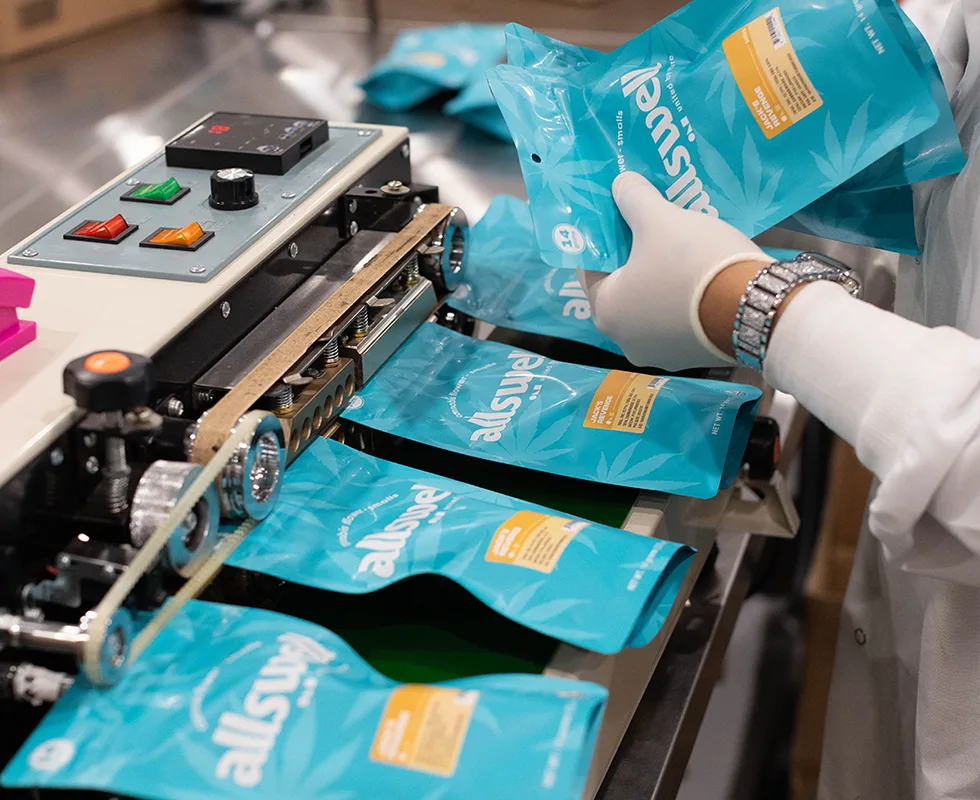


Cannabis Compliance Packaging Checklist for California Operators
Cannabis Compliance Packaging Checklist for California Operators
Note: California cannabis regulations are updated periodically by the DCC. Operators should always verify current requirements directly with the DCC or licensed California cannabis compliance counsel before finalizing packaging. This checklist is a reference tool, not a substitute for compliance review.
Cannabis compliance checklist covers all seven areas California operators need to confirm before a single unit goes to print or to market.
Key Takeaways
- California cannabis packaging compliance has three layers: physical packaging requirements (child-resistant, tamper-evident), label content requirements (required elements on each panel), and production workflow requirements (Metrc integration, COA matching, testing).
- Missing a single required label element can prevent a product from entering the California distribution chain — compliance is not graded on partial credit.
- Compliance requirements vary by product category — flower, pre-rolls, vapes, concentrates, and edibles each have category-specific requirements on top of the general rules.
- California packaging regulations have evolved since the legal market opened and will continue to evolve — a checklist built for 2022 may not be fully current in 2026.
- Working with a licensed California manufacturing partner whose compliance workflows are built into every production run is one of the most reliable ways to ensure packaging meets current DCC requirements without requiring operators to become regulatory experts themselves.
How to Use This Checklist
This checklist is organized into seven sections that cover every major compliance area in California cannabis packaging. Each section includes a checklist table that operators can work through before production begins.
The checklist is designed to be used at the pre-production stage — before artwork is approved and before packaging materials are ordered. Compliance issues caught at this stage cost only the time for correction. Compliance issues caught after production cost significantly more.
For each checklist item, three columns are provided: the requirement, a status column (for operators to mark complete, in progress, or not started), and a notes column for recording specific details, supplier documentation, or open questions.
Section 1: Physical Packaging Requirements
Physical packaging compliance covers the container itself — not the label, but the package the product goes into. These requirements must be confirmed before packaging materials are ordered.
Child-Resistant Packaging
All cannabis products sold at retail in California must be in CPSC-certified child-resistant packaging. CR compliance is a packaging property, not a label requirement — the physical container must meet the standard.
| Child-Resistant Packaging Requirement | Status | Notes / Documentation |
| CR certification confirmed for primary packaging format | [ ] Complete [ ] In Progress [ ] Not Started | Supplier must provide written documentation confirming CPSC certification |
| CR certification is current and on file | [ ] Complete [ ] In Progress [ ] Not Started | Documentation should be dated and specific to the packaging SKU being used |
| CR certification covers California cannabis use | [ ] Complete [ ] In Progress [ ] Not Started | Some CR certifications are for pharmaceutical use only — confirm cannabis-appropriate certification |
| CR packaging remains CR after opening (resealable products) | [ ] Complete [ ] In Progress [ ] Not Started | Resealable packaging must remain child-resistant after initial opening |
| Multipack outer packaging is CR certified | [ ] Complete [ ] In Progress [ ] Not Started | For multipacks, the outer packaging must meet CR standards |
| Adult use exemption waiver process documented (if applicable) | [ ] Complete [ ] In Progress [ ] Not Started | If offering non-CR packaging to adults who request it, waiver process must be in place at retail level |
Tamper-Evident Sealing
California requires tamper-evident seals on all cannabis retail products. The seal must make it visibly apparent whether a product has been opened.
| Tamper-Evident Requirement | Status | Notes / Documentation |
| Tamper-evident seal selected for each packaging format | [ ] Complete [ ] In Progress [ ] Not Started | Seal type confirmed: heat shrink band, sticker seal, induction seal, blister back, or other |
| Seal is visibly destructed or altered when packaging is opened | [ ] Complete [ ] In Progress [ ] Not Started | The seal must show visible evidence of opening — cannot be reapplied |
| Seal application method confirmed for production workflow | [ ] Complete [ ] In Progress [ ] Not Started | Heat gun, automated shrink tunnel, pressure-applied sticker — method confirmed |
| Tamper seal material sourced and in production inventory | [ ] Complete [ ] In Progress [ ] Not Started | Seal materials ordered and on hand before production run is scheduled |
Packaging Opacity and Exit Packaging
California requires that cannabis products not be visible through retail packaging. Additionally, retailers must provide opaque exit packaging to consumers at point of sale.
| Opacity and Exit Packaging | Status | Notes / Documentation |
| Product is not visible through retail packaging | [ ] Complete [ ] In Progress [ ] Not Started | Packaging must obscure product from view — clear packaging is generally not permitted for retail sale |
| Exit packaging requirements communicated to retail partners | [ ] Complete [ ] In Progress [ ] Not Started | Exit packaging is the retailer’s responsibility, but brands should confirm retailers understand the requirement |
| Want Compliance Built Into Your Production Run?
At Chronic USA®, every production run includes packaging compliance verification before product leaves our facility. Schedule a tour to see our compliance workflow in action. |
Section 2: Required Label Elements — Universal Requirements
These label elements are required on all California cannabis products regardless of product category. Every item on this list must be present and correctly formatted on the appropriate packaging panel.
Primary Panel Requirements
| Primary Panel Requirement | Status | Notes |
| Universal cannabis symbol present on primary panel | [ ] Complete [ ] In Progress [ ] Not Started | Must use the exact DCC-approved symbol — downloaded from DCC website, no modifications |
| Universal cannabis symbol meets minimum size requirement | [ ] Complete [ ] In Progress [ ] Not Started | Confirm printed dimensions meet DCC minimum — measure on physical proof, not just digital file |
| Universal cannabis symbol is clearly visible against background | [ ] Complete [ ] In Progress [ ] Not Started | Symbol must contrast with label background — cannot be reversed or obscured |
| Net weight declared in both metric and US customary units | [ ] Complete [ ] In Progress [ ] Not Started | Both grams and ounces required — metric listed first per standard convention |
| Product identity statement present | [ ] Complete [ ] In Progress [ ] Not Started | What the product is must be identifiable from the primary panel |
| Statement that product contains cannabis | [ ] Complete [ ] In Progress [ ] Not Started | Required disclosure that the product contains cannabis |
Informational Panel Requirements
| Informational Panel Requirement | Status | Notes |
| Universal cannabis symbol present on informational panel | [ ] Complete [ ] In Progress [ ] Not Started | Symbol required on both panels — confirm it appears on informational panel as well as primary |
| Full government warning statement present verbatim | [ ] Complete [ ] In Progress [ ] Not Started | The complete DCC government warning text must appear in full — no truncation or paraphrasing |
| Warning statement font size meets minimum requirement | [ ] Complete [ ] In Progress [ ] Not Started | Confirm printed font size meets DCC minimum — measure on physical proof |
| Total THC content declared per package in milligrams | [ ] Complete [ ] In Progress [ ] Not Started | Must match batch COA — do not finalize until COA is received for this specific batch |
| Total CBD content declared per package in milligrams | [ ] Complete [ ] In Progress [ ] Not Started | Must match batch COA |
| THC and CBD per serving declared (where applicable) | [ ] Complete [ ] In Progress [ ] Not Started | Required for products with multiple servings — confirm whether serving size applies to this product |
| Batch number present | [ ] Complete [ ] In Progress [ ] Not Started | Batch number must match the Metrc batch record for this production run |
| Lot number present | [ ] Complete [ ] In Progress [ ] Not Started | Lot number for track-and-trace compliance |
| Manufactured date present | [ ] Complete [ ] In Progress [ ] Not Started | Date product was manufactured — batch-specific, not a static label field |
| Best by or expiration date present (where applicable) | [ ] Complete [ ] In Progress [ ] Not Started | Confirm whether this product type requires an expiration or best-by date under DCC rules |
| Manufacturer name and license number present | [ ] Complete [ ] In Progress [ ] Not Started | The licensed manufacturer who produced the product — name and DCC license number both required |
| Distributor name and license number present | [ ] Complete [ ] In Progress [ ] Not Started | The licensed distributor responsible for the product — confirmed before label is finalized |
| Licensed facility address present | [ ] Complete [ ] In Progress [ ] Not Started | Address of the licensed manufacturing facility where the product was produced |
| Metrc UID tracking number present | [ ] Complete [ ] In Progress [ ] Not Started | State seed-to-sale tracking number assigned to this batch — batch-specific |
| Net weight present (if not already on primary panel) | [ ] Complete [ ] In Progress [ ] Not Started | If not included on primary panel, net weight must appear on informational panel |
Prohibited Label Content
| Prohibited Content Check | Status | Notes |
| No imagery or language that could appeal to minors | [ ] Complete [ ] In Progress [ ] Not Started | Review all design elements — characters, imagery, color schemes — for minor-appeal risk |
| No false or misleading health claims | [ ] Complete [ ] In Progress [ ] Not Started | No claims that the product prevents, treats, or cures any condition |
| No claims that the product is safe, harmless, or beneficial | [ ] Complete [ ] In Progress [ ] Not Started | Cannabis cannot be presented as a safe or healthful product |
| No imitation of non-cannabis food product packaging | [ ] Complete [ ] In Progress [ ] Not Started | Edibles especially — packaging cannot resemble commercially available non-cannabis food products |
| No references to alcohol or other controlled substances | [ ] Complete [ ] In Progress [ ] Not Started | No alcohol or other substance references on cannabis packaging |
| No misleading potency claims | [ ] Complete [ ] In Progress [ ] Not Started | Cannabinoid content must reflect actual COA results — no estimated or projected potency |
Section 3: Product-Category-Specific Requirements
In addition to the universal requirements, California has specific requirements for each product category. Confirm which category applies to your product and complete the relevant checklist.
Flower-Specific Requirements
| Flower Requirement | Status | Notes |
| Net weight declared in grams and ounces | [ ] Complete [ ] In Progress [ ] Not Started | Both units required per California labeling standards |
| Moisture content within acceptable range for fill weight accuracy | [ ] Complete [ ] In Progress [ ] Not Started | Moisture managed before production to ensure accurate fill weights at labeled weight |
| Cannabinoid content from current batch COA | [ ] Complete [ ] In Progress [ ] Not Started | Do not use a previous batch COA — content must be batch-specific |
| Strain information accurate and consistent with Metrc records | [ ] Complete [ ] In Progress [ ] Not Started | Strain name on label must match Metrc batch records |
Pre-Roll-Specific Requirements
| Pre-Roll Requirement | Status | Notes |
| Total THC declared per pre-roll and per package (multipacks) | [ ] Complete [ ] In Progress [ ] Not Started | Per-unit and per-package disclosure required for multipacks |
| Infused pre-roll disclosure present (if applicable) | [ ] Complete [ ] In Progress [ ] Not Started | Must disclose that product is infused if concentrate, oil, or other material has been added |
| Combined cannabinoid content from all components (infused) | [ ] Complete [ ] In Progress [ ] Not Started | Label must reflect combined potency of flower and all infused materials — not flower only |
| Fill weight matches labeled weight within tolerance | [ ] Complete [ ] In Progress [ ] Not Started | Fill weight monitoring documentation on file for the production run |
Vape Product-Specific Requirements
| Vape Product Requirement | Status | Notes |
| Oil type disclosed on label | [ ] Complete [ ] In Progress [ ] Not Started | Type of cannabis oil used (distillate, live resin, etc.) must be declared |
| Volume declared in milliliters | [ ] Complete [ ] In Progress [ ] Not Started | Volume in mL required on all vape cartridge and disposable labels |
| THC and CBD declared per cartridge or device in milligrams | [ ] Complete [ ] In Progress [ ] Not Started | Per-unit milligram declaration required — must match COA |
| Hardware details disclosed (if required) | [ ] Complete [ ] In Progress [ ] Not Started | Confirm current DCC requirements for hardware disclosure on vape products |
| Residual solvents testing passed and COA on file | [ ] Complete [ ] In Progress [ ] Not Started | Required for manufactured products — residual solvent panel required in testing |
| CR packaging covers hardware and packaging combination | [ ] Complete [ ] In Progress [ ] Not Started | The combination of hardware and packaging must meet CR standards — not packaging alone |
Concentrate-Specific Requirements
| Concentrate Requirement | Status | Notes |
| Concentrate type identified on label | [ ] Complete [ ] In Progress [ ] Not Started | Rosin, resin, badder, wax, sauce, or other type declared |
| Net weight declared per unit | [ ] Complete [ ] In Progress [ ] Not Started | Weight of cannabis concentrate per container |
| Total THC and CBD per package in milligrams | [ ] Complete [ ] In Progress [ ] Not Started | Must match batch COA for the concentrate |
| Residual solvents panel passed (solvent-extracted concentrates) | [ ] Complete [ ] In Progress [ ] Not Started | Required for BHO, PHO, and other solvent-extracted products |
| Container seal integrity confirmed before labeling | [ ] Complete [ ] In Progress [ ] Not Started | Container lids sealed and tamper seal applied before label is applied |
Edible and Infused Product-Specific Requirements
| Edible Requirement | Status | Notes |
| Individual serving size declared | [ ] Complete [ ] In Progress [ ] Not Started | Serving size in appropriate unit of measurement — grams, mL, or piece |
| Total servings per package declared | [ ] Complete [ ] In Progress [ ] Not Started | Number of individual servings in the package |
| Total THC per serving and per package in milligrams | [ ] Complete [ ] In Progress [ ] Not Started | Both per-serving and per-package declarations required |
| Additional edible-specific warnings present | [ ] Complete [ ] In Progress [ ] Not Started | DCC-required edible warnings in addition to standard government warning |
| Packaging does not resemble a commercially available non-cannabis food product | [ ] Complete [ ] In Progress [ ] Not Started | Edible packaging scrutinized for food product imitation — review carefully |
| No imagery associated with minors or children’s products | [ ] Complete [ ] In Progress [ ] Not Started | Edibles face heightened scrutiny for minor-appeal packaging |
| Delayed effects warning language present | [ ] Complete [ ] In Progress [ ] Not Started | Warning that intoxicating effects may be delayed up to two hours |
| Need a Manufacturing Partner Whose Compliance Is Built In?
Chronic USA® manages compliance packaging, label review, and Metrc workflows as standard parts of every production run. Talk with our team about how we keep your products compliant. |
Section 4: Testing Compliance
State-required laboratory testing is a mandatory compliance step before any California cannabis product enters the distribution chain. These checklist items ensure testing is coordinated correctly and COA data is properly used in labeling.
| Testing Compliance Requirement | Status | Notes / Lab Contact |
| Licensed California testing laboratory identified | [ ] Complete [ ] In Progress [ ] Not Started | Lab must hold a valid California DCC testing laboratory license |
| Full panel testing scope confirmed for this product type | [ ] Complete [ ] In Progress [ ] Not Started | Potency, pesticides, heavy metals, microbials, and residual solvents (if applicable) all required |
| Sample submission process confirmed with lab | [ ] Complete [ ] In Progress [ ] Not Started | How samples will be submitted — through distributor or directly — and timeline confirmed |
| Testing timeline built into production-to-distribution schedule | [ ] Complete [ ] In Progress [ ] Not Started | Products cannot be distributed until COA is on file — testing time accounted for in timeline |
| COA received before cannabinoid content added to label | [ ] Complete [ ] In Progress [ ] Not Started | Never finalize label with cannabinoid content before batch COA is in hand |
| Cannabinoid content on label matches COA values exactly | [ ] Complete [ ] In Progress [ ] Not Started | Label values must match COA — rounding and unit conversion verified |
| COA is for this specific batch (not a previous batch) | [ ] Complete [ ] In Progress [ ] Not Started | Every batch requires its own COA — previous batch COA cannot be used |
| COA linked to correct Metrc batch record | [ ] Complete [ ] In Progress [ ] Not Started | COA documentation associated with correct Metrc batch before distribution transfer |
| Failed test panel remediation plan in place (if applicable) | [ ] Complete [ ] In Progress [ ] Not Started | If a batch has previously failed testing, confirm remediation has occurred and retest COA is on file |
Section 5: Metrc Track-and-Trace Compliance
California requires all cannabis products to be tracked through Metrc from production through retail sale. These checklist items cover the Metrc compliance requirements at the production and packaging stage.
| Metrc Compliance Requirement | Status | Notes |
| Incoming inputs logged into Metrc at intake | [ ] Complete [ ] In Progress [ ] Not Started | All cannabis inputs received at the facility must be entered in Metrc before production begins |
| Production batch created in Metrc with correct product type | [ ] Complete [ ] In Progress [ ] Not Started | Batch created under the correct product category to ensure appropriate testing requirements |
| Metrc UID tags applied to all finished packages before transfer | [ ] Complete [ ] In Progress [ ] Not Started | UID tags must be on packaging before product physically leaves the facility |
| Package weights entered in Metrc match physical finished product | [ ] Complete [ ] In Progress [ ] Not Started | Metrc records and physical inventory must match — discrepancies flagged and resolved before transfer |
| Metrc UID number present on product label | [ ] Complete [ ] In Progress [ ] Not Started | UID must appear on the label for traceability through the distribution chain |
| Metrc transfer initiated before product physically moves | [ ] Complete [ ] In Progress [ ] Not Started | Transfer record must be created in Metrc before any physical movement between licensees |
| Receiving licensee (distributor) confirmed in Metrc transfer | [ ] Complete [ ] In Progress [ ] Not Started | Transfer must be directed to the correct licensed receiving entity |
| Batch weight discrepancy resolution process documented | [ ] Complete [ ] In Progress [ ] Not Started | Protocol in place for resolving weight discrepancies between input records and output records |
Section 6: Distribution Readiness Checklist
Before products transfer to a licensed distributor, the following compliance and documentation items must be complete. Products that arrive at the distributor without these items in order will be held at the QA stage.
| Distribution Readiness Item | Status | Notes |
| All required label elements present and verified against DCC requirements | [ ] Complete [ ] In Progress [ ] Not Started | Full label compliance review completed — not just visual check |
| Child-resistant packaging confirmed with documentation on file | [ ] Complete [ ] In Progress [ ] Not Started | CR certification documentation available to provide to distributor on request |
| Tamper-evident seal applied to all retail units | [ ] Complete [ ] In Progress [ ] Not Started | Visual confirmation that every unit has tamper seal before case packing |
| Batch COA on file and cannabinoid content matches labels | [ ] Complete [ ] In Progress [ ] Not Started | COA available for distributor QA review — values verified against label |
| Metrc transfer record created and confirmed | [ ] Complete [ ] In Progress [ ] Not Started | Transfer record in Metrc accepted by distributor before physical pickup |
| Batch records (production documentation) organized and accessible | [ ] Complete [ ] In Progress [ ] Not Started | Fill weight logs, input records, QC documentation, COA — organized for audit readiness |
| Unit count verified and matches Metrc package records | [ ] Complete [ ] In Progress [ ] Not Started | Physical unit count matches Metrc package quantity records |
| Case packing complete and cases labeled appropriately | [ ] Complete [ ] In Progress [ ] Not Started | Cases labeled for distributor identification and inventory management |
Section 7: Ongoing Compliance — Staying Current With DCC Regulations
California cannabis packaging regulations are not static. The DCC updates requirements periodically, and products that were compliant at launch may require updates as regulations evolve.
How Often Do California Cannabis Packaging Regulations Change?
The California Department of Cannabis Control updates its regulations and guidance documents on an ongoing basis. Major regulatory changes typically occur annually or less frequently, but guidance clarifications and policy updates can occur more frequently.
Areas that have seen the most evolution since the California legal market opened:
- Labeling requirements and required disclosure language
- Universal symbol specifications — the symbol format and minimum size requirements have been updated
- Packaging requirements for specific product categories, particularly edibles and vape products
- Testing requirements and COA documentation standards
- Metrc and track-and-trace procedures
Ongoing Compliance Checklist
| Ongoing Compliance Item | Status | Notes / Responsible Party |
| DCC website reviewed for regulatory updates at start of each new packaging project | [ ] Complete [ ] In Progress [ ] Not Started | Download current DCC labeling guide directly from DCC website — do not rely on cached or third-party versions |
| Label artwork version control system in place | [ ] Complete [ ] In Progress [ ] Not Started | System for tracking label versions, update dates, and regulatory basis for each element |
| Process in place for updating labels when DCC requirements change | [ ] Complete [ ] In Progress [ ] Not Started | Who is responsible for monitoring changes, who approves label updates, how quickly changes are implemented |
| Packaging inventory reviewed for compliance risk before large orders | [ ] Complete [ ] In Progress [ ] Not Started | Before ordering large quantities of labeled packaging, confirm no regulatory changes are pending that would require label updates |
| Manufacturing partner compliance monitoring confirmed | [ ] Complete [ ] In Progress [ ] Not Started | If using a manufacturing partner, confirm their process for staying current with DCC updates and updating production workflows |
| Annual packaging compliance audit scheduled | [ ] Complete [ ] In Progress [ ] Not Started | Periodic review of all active label artwork against current DCC requirements — recommended annually at minimum |
| California cannabis legal counsel or compliance professional identified | [ ] Complete [ ] In Progress [ ] Not Started | Relationship established with California-specific cannabis compliance resource for regulatory questions |
Common Regulatory Update Triggers
| Trigger Event | Required Compliance Action |
| DCC Regulatory Action or Emergency Regulation | Immediate review of all active label artwork required — changes may need to be implemented before next production run |
| New Product Category Launch | Full compliance review from scratch for the new category — do not assume existing label templates cover new product type |
| Packaging Supplier Change | New packaging format requires CR certification documentation from new supplier and compliance review of new format |
| Label Artwork Revision | Any artwork change requires a full compliance review of the revised artwork — not just the changed elements |
| Brand Acquisition or Merger | All acquired brand packaging requires compliance review — legacy compliance standards may not meet current DCC requirements |
| New Retail Market or Distribution Expansion | Confirm no market-specific compliance requirements differ from current packaging standards |
| Ready to Launch With Compliance Handled From the Start?
Chronic USA® is a licensed cannabis manufacturing and co-packing facility in Long Beach, California. Our production workflows include DCC-compliant labeling review, child-resistant packaging, tamper sealing, and Metrc track-and-trace at every step. Our facility supports: Pre-roll manufacturing · Flower packaging · Cart filling · Concentrate packaging · White label products · Compliance packaging · Distribution support · High-volume production |
Quick Reference: California Cannabis Packaging Compliance Summary
| Requirement | Applies To | Key Detail |
| Child-Resistant Packaging | All retail cannabis products | CPSC certification documentation required from supplier |
| Tamper-Evident Seal | All retail cannabis products | Must show visible evidence of opening — cannot be reapplied |
| Universal Cannabis Symbol | All retail cannabis products — both panels | DCC-approved symbol only, minimum size, no modifications |
| Government Warning Statement | All retail cannabis products — informational panel | Verbatim, full text, minimum font size |
| Total THC and CBD in mg | All retail cannabis products | Per package and per serving — must match batch COA |
| Net Weight | All retail cannabis products — both units | Grams and ounces — metric listed first |
| Batch and Lot Numbers | All retail cannabis products | Batch-specific — must match Metrc records |
| Manufacturer and Distributor Info | All retail cannabis products | Name and DCC license number for both |
| Manufactured Date | All retail cannabis products | Batch-specific — not a static label field |
| Metrc UID | All retail cannabis products | Applied to packaging, appears on label |
| Oil Type Disclosure | Vape products only | Type of cannabis oil used must be declared |
| Serving Size and Servings Per Package | Edibles and infused products | Individual serving size and total servings required |
| Product Visible Through Packaging | All retail — product must NOT be visible | Opaque packaging required |
| Minor-Appeal Imagery | All retail — PROHIBITED | Characters, cartoons, child-associated imagery not permitted |
| Health Claims | All retail — PROHIBITED | No therapeutic, treatment, or benefit claims |
Frequently Asked Questions
What should be on a California cannabis packaging compliance checklist?
A complete California cannabis packaging compliance checklist covers seven areas: physical packaging requirements (child-resistant certification, tamper-evident sealing, packaging opacity), required label elements on the primary panel (universal cannabis symbol, net weight, product identity), required label elements on the informational panel (government warning, cannabinoid content, batch information, licensee details, Metrc UID), prohibited label content, product-category-specific requirements (flower, pre-rolls, vapes, concentrates, edibles each have additional rules), testing compliance (COA coordination and label verification), Metrc compliance, and distribution readiness. Missing any required element can prevent products from entering the California distribution chain.
What California cannabis packaging laws apply to all products?
Every cannabis product sold at retail in California must be in CPSC-certified child-resistant packaging with a tamper-evident seal, carry the DCC-approved universal cannabis symbol on both packaging panels, include the full government warning statement verbatim, declare total THC and CBD per package in milligrams verified against the batch COA, include net weight in both metric and US customary units, carry batch and lot numbers, include manufacturer and distributor name and license numbers, show the manufactured date, display the licensed facility address, and include the Metrc UID tracking number. Product must not be visible through the packaging.
How often do California cannabis packaging regulations change?
California’s DCC updates its regulations and guidance documents on an ongoing basis. Major regulatory changes occur periodically — often annually or less frequently — but guidance clarifications and policy updates can come more frequently. Areas that have seen the most evolution include labeling requirements and disclosure language, universal symbol specifications, edible and vape product-specific rules, and Metrc procedures. Brands should review current DCC requirements directly from the DCC website at the start of every new packaging project and should not rely on templates or third-party resources without verifying currency.
What happens if a cannabis product fails packaging compliance in California?
Products that fail compliance review at the distributor QA stage are held until corrections are made. Products that fail because of labeling errors require relabeling — reprinting labels, removing incorrect labels, applying corrected labels, and in some cases reopening tamper seals and resealing. The cost of post-production compliance corrections typically ranges from $2,000 to $15,000 or more depending on batch size and the nature of the error. Products that fail because of physical packaging non-compliance (non-CR packaging, missing tamper seal) may require complete repackaging. Products that reach retail with compliance errors can trigger DCC regulatory action.
Is a compliance review required before cannabis packaging goes to print?
California does not mandate a specific compliance review process before packaging goes to print — but performing a thorough compliance review before artwork is approved is one of the most important risk management steps a cannabis brand can take. A compliance review before printing costs $300 to $1,000 in most cases. A compliance error discovered after printing and applied to product costs $2,000 to $15,000 or more. The cost difference is significant enough that no well-run California cannabis operation should approve packaging artwork without a DCC-specific compliance review.
What is the universal cannabis symbol requirement in California?
California requires the DCC-approved universal cannabis symbol to appear on both the primary panel and the informational panel of every cannabis retail product. The symbol must be downloaded directly from the DCC website and used exactly as provided — no modifications are permitted. It must meet DCC minimum size requirements (verify current dimensions directly with the DCC), be printed in a color clearly visible against the label background, and appear on both required panels. Using a modified, outdated, or incorrectly sized symbol is a common compliance error that is entirely preventable with a proper pre-print review.
What child-resistant packaging documentation is required in California?
California follows CPSC child-resistant packaging standards, which require packaging to have passed specific testing protocols with panels of children and adults. Operators must obtain written documentation from their packaging supplier confirming that the specific packaging format being used is CPSC-certified and appropriate for cannabis products. This documentation should identify the specific packaging SKU, the date of certification, and the testing standard the packaging was certified to. It should be maintained on file and available for review by distributors and DCC inspectors. Documentation from a different packaging format or a generic supplier statement is not sufficient.
How does Metrc compliance relate to packaging?
Metrc compliance is integrated into the packaging process at several points. All incoming cannabis inputs must be logged in Metrc before production begins. Each finished product batch must be created as a Metrc package with a UID tag applied to the packaging before the product leaves the manufacturing facility. The Metrc UID number must appear on the product label. Package weights in Metrc must match physical inventory counts. Metrc transfer records must be created before any physical movement of product between licensees. Errors in Metrc at the packaging stage can hold products at distribution until corrections are made.
What are the edible-specific packaging requirements in California?
Edibles and infused products have additional requirements beyond the general cannabis packaging rules. Labels must declare individual serving size, total servings per package, total THC per serving and per package in milligrams, and include DCC-required edible-specific warning language including warnings about delayed onset of effects. Packaging must not resemble commercially available non-cannabis food products. Imagery that could appeal to minors is strictly prohibited. These requirements make edible packaging one of the most carefully scrutinized product categories for compliance in California cannabis retail.
