


Cannabis Pre-Roll Manufacturing Costs Breakdown
Key Takeaways
- Pre roll manufacturing costs span five major categories: flower inputs, packaging materials, production labor, compliance and testing, and distribution — and every category affects the margin on every unit sold.
- Infused pre-roll manufacturing costs more per unit than standard pre-rolls because of the additional inputs, labor steps, and quality control requirements involved in producing them consistently.
- Automation through commercial filling equipment reduces per-unit labor cost at scale, but the equipment investment, maintenance, and operator expertise required makes outsourcing production to a licensed facility the more cost-efficient path for most brands.
- Volume is the single most powerful lever on per-unit manufacturing cost — the fixed overhead of production is spread across more units at higher volumes, improving unit economics regardless of the production model.
- Brands that outsource pre-roll production to a licensed manufacturing partner convert most fixed manufacturing costs to variable per-run fees, improving margin predictability across different demand levels.
Why Pre-Roll Manufacturing Costs Are More Complex Than They Appear
Pre-rolls are one of the most popular product categories in California cannabis. They are also one of the most cost-intensive to produce well.
The unit economics of a pre-roll brand are determined by decisions made across five cost categories — some obvious, some frequently underestimated. Flower cost is the most visible. Labor, packaging, compliance, and the overhead of running a production operation often go underaccounted until they show up in the P&L.
This post breaks down every cost category in detail, explains what drives infusion pricing above standard pre-roll costs, and makes the honest comparison between automation-driven in-house production and outsourced manufacturing — so brands can build accurate cost models and make informed decisions about their production approach.
Cost Category 1: Flower Inputs
Flower is the largest input cost in pre-roll manufacturing and the one brands most accurately track. But there are nuances in how flower cost translates to per-unit cost that affect margin calculations.
Wholesale Flower Cost Ranges
California wholesale flower prices vary significantly by quality tier, strain, and market conditions. Rough current ranges:
| Quality Tier | Estimated Wholesale Price Range |
| Value Tier | $400 to $800 per pound — shake, trim, and lower-grade flower used in value pre-roll programs |
| Mid Tier | $800 to $1,500 per pound — standard whole-bud flower for mid-tier pre-roll programs |
| Premium Tier | $1,500 to $2,500+ per pound — high-quality whole-bud flower for premium SKUs |
| Exotic / Limited | $2,500+ per pound — specialty strains, limited availability, premium positioning |
How Flower Cost Translates to Per-Unit Cost
The calculation from per-pound flower cost to per-unit flower cost depends on fill weight:
At $1,000 per pound, a 1-gram pre-roll contains approximately $2.20 of flower (one pound = 453.6 grams, so $1,000 / 453.6 = $2.20 per gram). A 0.5-gram pre-roll at the same price contains approximately $1.10 of flower.
This calculation is useful for understanding how quality tier and fill weight interact in determining input cost per unit.
| Flower Cost Scenario | Approx. Input Cost Per Unit |
| $500/lb flower, 0.5g fill | Approx. $0.55 per unit |
| $500/lb flower, 1.0g fill | Approx. $1.10 per unit |
| $1,000/lb flower, 0.5g fill | Approx. $1.10 per unit |
| $1,000/lb flower, 1.0g fill | Approx. $2.20 per unit |
| $1,500/lb flower, 0.5g fill | Approx. $1.65 per unit |
| $1,500/lb flower, 1.0g fill | Approx. $3.31 per unit |
Moisture Loss and Yield
One factor that brands frequently miss in flower cost calculation is moisture loss. Flower at 14% moisture weighs more than the same flower after grinding and settling. Fill weight targets need to account for moisture variation to ensure finished units meet their labeled weight.
A well-run production operation will have established processes for managing moisture content at intake — but brands building cost models should account for some degree of input loss beyond the theoretical conversion.
Cost Category 2: Packaging Materials
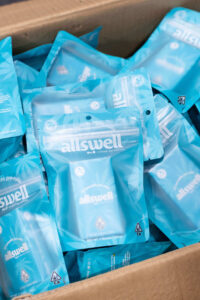
Packaging is the second-largest input cost after flower, and it is one where brands have significant latitude in cost management. Format, material, and quantity all affect per-unit packaging cost substantially.
Cone and Wrap Costs
| Cone or Wrap Type | Approximate Cost Per Unit |
| Standard Paper Cones (bulk) | $0.03 to $0.08 per cone depending on size and supplier |
| Hemp Paper Cones | $0.05 to $0.12 per cone — premium over standard |
| Unbleached or Specialty Cones | $0.06 to $0.15 per cone |
| Pre-rolled Tobacco Leaf Blunt Wraps | $0.15 to $0.35 per wrap — higher material cost |
| Hemp Leaf Wraps | $0.12 to $0.25 per wrap |
Retail Packaging Costs
| Packaging Component | Approximate Cost Per Unit |
| CR Tube (single pre-roll) | $0.15 to $0.45 per tube depending on material and print |
| CR Box (single) | $0.25 to $0.80 per box depending on construction and print |
| CR Mylar Pouch (multipack) | $0.20 to $0.60 per pouch |
| CR Box (2-pack or 5-pack) | $0.40 to $1.20 per box |
| Glass Jar (mini pre-roll multipack) | $0.60 to $1.50 per jar |
| Labels | $0.05 to $0.20 per label for standard compliance labels |
| Tamper Seal | $0.02 to $0.08 per unit for heat shrink or sticker seal |
Packaging costs are significantly affected by minimum order quantities. Custom-printed packaging — branded bags, boxes, or tubes — requires higher minimum orders and longer lead times but typically reduces per-unit cost versus stock packaging at sufficient volume.
Packaging Cost as a Percentage of Retail Price
A useful benchmark: in well-run pre-roll programs, total packaging cost (cone plus retail packaging plus labels plus tamper seal) typically runs 8% to 15% of retail price for standard formats. Infused pre-rolls in premium packaging can see packaging cost at 10% to 18% of retail price due to the higher cost of premium packaging formats and lower unit count per run.
Cost Category 3: Production Labor
Production labor is typically the most misunderstood cost category in pre-roll manufacturing — both because brands undercount the full cost of internal labor and because the comparison between automation and manual production is often framed incorrectly.
The Full Cost of Internal Production Labor
For brands with internal production, true labor cost per unit must include far more than base wages:
| Labor Cost Component | Impact on True Hourly Rate |
| Base Wages | California minimum wage plus any premium for experienced production staff |
| Employer Payroll Taxes | Approximately 10% to 15% on top of base wages — Social Security, Medicare, California SDI |
| Workers’ Compensation Insurance | Cannabis manufacturing is a high-classification activity — adds meaningfully to true hourly cost |
| Benefits | Health insurance, paid sick leave (mandated), any additional benefits |
| California Daily Overtime | Over 8 hours per day triggers overtime — affects every shift running long |
| Training and Onboarding | New workers require training time before reaching full productivity — recurring cost given high turnover |
| Supervision and Management | Production supervisors and operations managers are fixed labor costs beyond direct production hours |
When all employer-side costs are included, the true cost of a California cannabis production worker typically runs 30% to 45% above base wage. An operator paying $18/hour base wage is paying $23 to $26 per hour in true labor cost.
Manual vs. Automated Production Labor Cost
The labor cost comparison between manual and automated pre-roll production is one of the most common questions brands have when evaluating their production approach.
| Factor | Manual Production | Automated Production |
| Units per hour (1 worker) | 50 to 150 depending on format and worker skill | 500 to 3,000+ depending on machine and format |
| Labor cost per unit (at $23 all-in/hr) | $0.15 to $0.46 per unit | $0.01 to $0.05 per unit (machine operator amortized) |
| Equipment investment required | Minimal — basic tools only | $15,000 to $100,000+ depending on machine |
| Consistency of fill weight | Highly variable — operator-dependent | Consistent within calibrated tolerance |
| Throughput ceiling | Limited by headcount | Limited by machine capacity and operator count |
| Suitable volume range | Small batches under 1,000 units per run | Commercial runs of 1,000 to 100,000+ units |
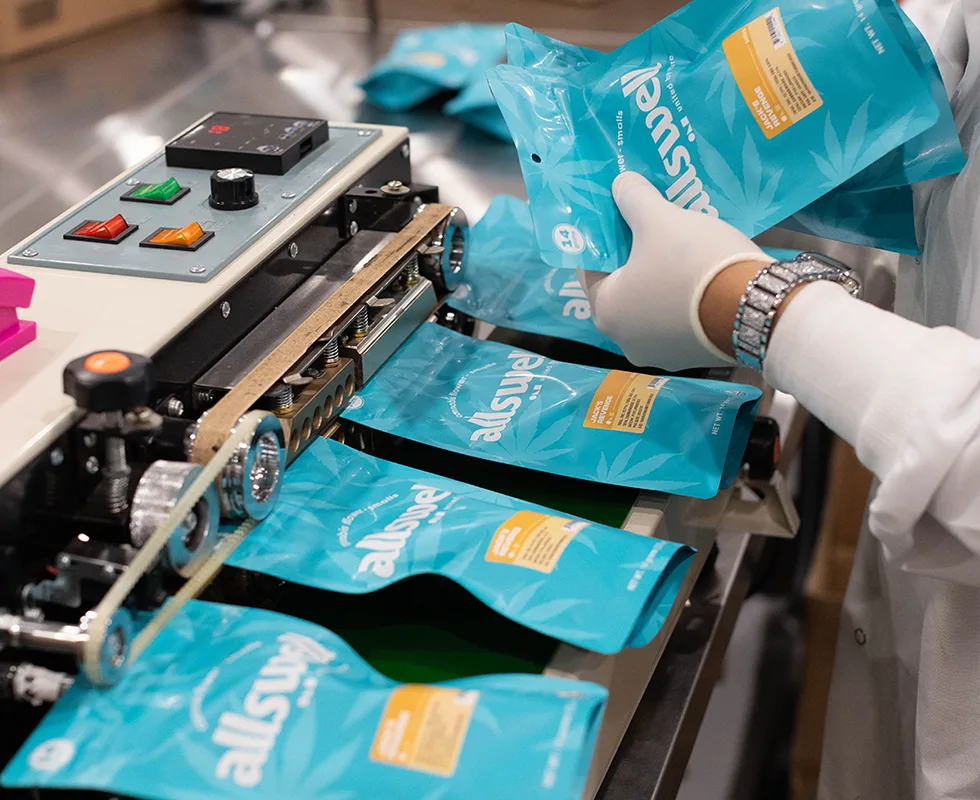
The labor cost advantage of automation is real and significant at commercial volumes. But the calculation must also include the cost of the equipment, maintenance, the trained operators needed to run it, and the facility and compliance infrastructure required to support a production operation.
When those full costs are included, outsourcing pre-roll manufacturing to a licensed facility that already has the equipment, staff, and infrastructure in place produces better unit economics than building internal automation for most brands operating below very high sustained volume.
| Want to Know What Pre-Roll Manufacturing Costs at Chronic USA?
Schedule a tour of our Long Beach facility and talk with our team about your specific product format, volume, and cost targets. |
Cost Category 4: Infused Pre-Roll Manufacturing Costs
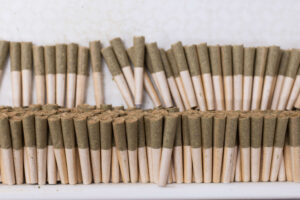
Infused pre-rolls are the premium segment of California’s pre-roll market. They command higher retail prices and generate stronger margins per unit — but they also cost more to produce, and the cost premium is often larger than brands expect when they first model infused production.
Why Infused Pre-Rolls Cost More to Manufacture
Every infused format adds cost above standard pre-roll manufacturing:
| Cost Driver | Why It Increases Per-Unit Cost |
| Concentrate or Infusion Input Cost | The infused material itself — live resin, distillate, kief, liquid diamonds — adds directly to input cost per unit |
| Additional Labor Steps | Coating, applying, blending, or rolling infused material requires additional production steps beyond standard filling and finishing |
| Lower Machine Throughput | Infused production typically runs more slowly than standard production — more labor hours per unit |
| More Complex QC | Coating consistency and infusion evenness require additional inspection — more labor per unit in quality control |
| More Complex COA Documentation | Label cannabinoid content must reflect combined potency of flower and all infused materials — more documentation work per batch |
Infusion Input Costs by Type
| Infusion Type | Approximate Wholesale Cost |
| Distillate (for internal or exterior coating) | $8 to $18 per gram at wholesale — applied at 0.1 to 0.3 grams per pre-roll typically |
| Live Resin (for infusion) | $15 to $35 per gram at wholesale — higher cost reflects better terpene profile and premium positioning |
| Liquid Diamonds (THCA + live resin sauce) | $25 to $50+ per gram at wholesale — most expensive common infusion type |
| Kief (for exterior rolling) | $3 to $8 per gram at wholesale — applied at 0.05 to 0.2 grams per pre-roll typically |
| Bubble Hash | $10 to $25 per gram at wholesale depending on quality grade |
| Live Rosin | $30 to $60+ per gram at wholesale — solventless premium |
Illustrative Infused Pre-Roll Cost Build
A 1-gram live resin infused pre-roll using mid-tier flower and a modest infusion dose illustrates how infused costs stack:
| Cost Component | Estimated Cost |
| Flower (1g at $1,000/lb) | Approx. $2.20 |
| Live Resin infusion (0.2g at $20/g) | Approx. $4.00 |
| Cone | Approx. $0.08 |
| Retail packaging (CR tube) | Approx. $0.30 |
| Label and tamper seal | Approx. $0.12 |
| Production labor (outsourced, infused premium) | Approx. $0.80 to $1.50 |
| Testing (per-batch allocated) | Approx. $0.05 to $0.15 |
| Total Estimated Manufacturing Cost | Approx. $7.55 to $8.35 per unit |
At a typical California wholesale price for a premium infused 1-gram pre-roll of $10 to $15 per unit, the margin after manufacturing cost is meaningful — but it depends heavily on infusion input cost, which is where most of the cost variability in infused pre-roll production lives.
What Affects Infusion Pricing Most
- Infusion type — liquid diamonds cost significantly more per gram than distillate; the choice of infusion material is the largest single driver of infused per-unit cost
- Infusion dose — more infusion material per unit directly increases input cost; typical doses range from 0.05 to 0.3 grams depending on format and positioning
- Production method — exterior coating and rolling (kief, hash) is more labor-intensive per unit than interior blending
- Volume — higher run volumes spread fixed production overhead across more units, improving per-unit economics
- Manufacturing approach — outsourced vs. internal production affects the allocation of labor and overhead costs as described above
Cost Category 5: Compliance, Testing, and Distribution
These three cost categories sit downstream of production but are essential components of the true per-unit cost of a California pre-roll. Brands that model only manufacturing costs and miss these categories consistently price their products incorrectly.
Testing Costs
All California cannabis products must pass state-required laboratory testing before entering distribution. Testing is per batch.
- Full panel testing for pre-rolls: approximately $300 to $600 per batch at most California licensed labs
- Rush testing: available at most labs at a meaningful premium over standard rates
- Per-unit testing cost depends on batch size — a $400 test allocated across 1,000 units is $0.40 per unit; across 10,000 units it is $0.04 per unit
Testing cost is one of the strongest arguments for larger production runs where feasible — the per-unit testing cost drops significantly as batch size increases.
Distribution Costs
California cannabis products must move through a licensed distributor before reaching retailers. Distribution fees affect every unit sold:
- Standard third-party distributor fees: 15% to 30% of wholesale value depending on distributor and market
- California excise tax: 15% of average market price, collected at the distributor-to-retailer level — this flows through the supply chain and affects pricing models
- Storage fees: some distributors charge storage fees for inventory held beyond standard pickup windows
Compliance Packaging Costs
Compliance packaging — the child-resistant packaging and tamper-evident seals required on all California cannabis products — is a manufacturing cost but often tracked separately from standard packaging in brands’ cost models. For clarity:
- CR tube or CR box: the compliance-required container is typically the same as the retail packaging — cost is included in packaging materials
- Tamper seal application: labor cost for applying seals is part of production labor; material cost is covered in packaging materials
- Label artwork compliance review: a one-time cost per label design, typically a few hundred to a few thousand dollars depending on the reviewer and scope
Building a Complete Pre-Roll Cost Model
Pulling all five cost categories together into a complete per-unit cost model gives brands the accurate view of unit economics needed to make pricing, production, and profitability decisions.
Illustrative Standard 1-Gram Pre-Roll Cost Build
| Cost Component | Estimated Cost |
| Flower Input (1g at $1,000/lb) | Approx. $2.20 |
| Cone | Approx. $0.06 |
| CR Tube and Label | Approx. $0.40 |
| Tamper Seal | Approx. $0.04 |
| Production Labor (outsourced) | Approx. $0.50 to $0.80 |
| Testing (allocated per unit, 5,000-unit batch) | Approx. $0.08 to $0.12 |
| Distribution Fee (20% of $6 wholesale) | Approx. $1.20 |
| Excise Tax (15% of avg market price) | Variable — flows through distribution |
| Total Estimated All-In Per-Unit Cost | Approx. $4.48 to $4.82 (before excise tax) |
How Volume Changes the Math
Volume is the most powerful lever on pre-unit cost across almost every cost category:
| Cost Component | Low Volume | Mid Volume | High Volume |
| Testing Cost Per Unit | $0.40 (1,000-unit batch) | $0.08 (5,000-unit batch) | $0.04 (10,000-unit batch) |
| Packaging Cost Per Unit | Higher — small order MOQ pricing | Mid — volume pricing begins | Lower — full volume pricing |
| Production Labor Per Unit (outsourced) | May carry small-run premium | Standard rate | Volume discount potential |
| Fixed Overhead Per Unit (in-house) | High — few units absorbing fixed base | Lower — more units sharing fixed base | Lowest — maximum overhead absorption |
The step-change in per-unit economics between small runs (under 1,000 units) and commercial runs (5,000 to 10,000+ units) is significant enough to change the viability of certain price points. Brands launching at small volumes should model their per-unit costs at target scale — not only at launch volume — to confirm the long-term margin profile of the product.
| Ready to Get a Clearer Picture of Your Pre-Roll Production Costs?
Chronic USA® works with cannabis brands across every volume tier. Talk with our team about your specific product format, infusion type, and volume targets to get a realistic cost picture. |
In-House vs. Outsourced: The True Cost Comparison for Pre-Roll Brands
The comparison between producing pre-rolls in-house versus outsourcing to a licensed manufacturing partner is ultimately a question about where fixed costs sit and who absorbs them at different volume levels.
| Cost Factor | In-House Production | Outsourced Production |
| Equipment (filling machine) | $15,000 to $100,000+ upfront | None — included in partner’s infrastructure |
| Facility Overhead | $5,000 to $25,000+/month fixed | None |
| Production Labor (all-in) | $23 to $30+/hr true cost, fixed headcount | Variable — per-run fee only |
| Compliance Infrastructure | $5,000 to $20,000+ to build, ongoing | Included in partner relationship |
| Equipment Maintenance | 5% to 15% of equipment value annually | Partner’s responsibility |
| Time to First Production | 3 to 18+ months (licensing, equipment, hiring) | Weeks |
| Per-Unit Labor at 5,000 units/run | $0.30 to $0.60 depending on format | $0.50 to $0.80 outsourced fee |
| Break-Even Volume | Requires sustained high volume to cover fixed base | Lower — no fixed base to cover |
At lower to mid production volumes, the variable cost structure of outsourced manufacturing consistently produces better total unit economics than in-house production when all costs are included. The in-house model becomes more competitive at very high sustained volumes where fixed costs are fully absorbed — but most pre-roll brands in California are not yet operating at that threshold.
Frequently Asked Questions
How much does pre-roll manufacturing cost?
Total per-unit pre-roll manufacturing cost — including flower input, cone, packaging, production labor, and testing allocation — typically ranges from approximately $2.50 to $6.00 per unit for standard 1-gram pre-rolls depending on flower quality tier, packaging format, production volume, and production approach. Infused pre-rolls range from $6.00 to $12.00+ per unit depending on infusion type and dose. These ranges do not include distribution fees (15% to 30% of wholesale) or excise tax, which are additional costs that affect the total per-unit economics.
What affects infused pre-roll manufacturing pricing?
The largest drivers of infused pre-roll manufacturing cost above standard pre-roll cost are the infusion input type and dose (liquid diamonds and live rosin cost significantly more per gram than distillate or kief), the labor intensity of the infusion method (exterior coating and rolling is more labor-intensive per unit than interior blending), production volume (higher volumes spread fixed production overhead and testing costs across more units), and the manufacturing approach (outsourced vs. in-house production affects how labor and overhead costs are allocated per unit).
Is automation cheaper than manual pre-roll manufacturing?
Automated filling equipment produces significantly lower per-unit labor cost than manual production at commercial volumes — reducing direct labor from $0.15 to $0.46 per unit manually to $0.01 to $0.05 per unit automated. However, the full cost of automation includes equipment purchase ($15,000 to $100,000+), maintenance (5% to 15% of equipment value annually), trained operators, and the facility and compliance infrastructure to support a production operation. When all costs are included, outsourcing pre-roll manufacturing to a licensed facility that already has the equipment and infrastructure produces better unit economics than building internal automation for most brands operating below very high sustained production volumes.
How does production volume affect pre-roll manufacturing cost?
Volume is the most powerful lever on per-unit manufacturing cost. Testing cost per unit drops from $0.40 at a 1,000-unit batch to $0.04 at a 10,000-unit batch as the same testing fee is spread across more units. Packaging cost per unit decreases at higher volumes as minimum order quantity pricing improves. Production labor per unit decreases with automation. For in-house production, fixed overhead (facility, equipment, management) is spread across more units at higher volume, reducing per-unit overhead allocation. The step-change in unit economics between small runs and commercial runs is significant enough to affect the viability of certain price points.
What is the difference in cost between standard and infused pre-roll manufacturing?
A standard 1-gram pre-roll using mid-tier flower typically has a total manufacturing cost of approximately $3.50 to $5.00 per unit including flower, cone, packaging, production labor, and testing allocation. A 1-gram live resin infused pre-roll using the same flower tier with a 0.2-gram live resin dose adds approximately $4.00 to $7.00 in additional input, labor, and QC cost per unit, bringing the total manufacturing cost to approximately $7.50 to $12.00 per unit. The premium retail price for infused formats must cover this cost differential while still generating an acceptable margin.
What packaging costs should pre-roll brands budget for?
Total packaging cost per unit for a standard pre-roll — including the cone, CR retail packaging (tube or box), compliance label, and tamper seal — typically ranges from $0.25 to $0.80 per unit for standard formats. Premium packaging formats (branded boxes, glass jar multipacks) can run $0.80 to $2.00+ per unit. Custom-printed packaging reduces per-unit cost versus stock packaging at sufficient volume but requires higher minimum order quantities and longer lead times. Packaging cost as a percentage of retail price typically runs 8% to 15% for standard pre-roll formats.
How is California pre-roll testing cost calculated per unit?
California requires full panel testing per production batch. Testing fees at licensed California laboratories typically run $300 to $600 per batch for pre-roll products. The per-unit testing cost is the total test fee divided by the number of units in the batch: a $400 test on a 1,000-unit run is $0.40 per unit; on a 10,000-unit run it is $0.04 per unit. This is one of the clearest examples of how production volume improves unit economics — the testing fee is fixed regardless of batch size, so more units means a lower per-unit allocation.
What does California cannabis distribution cost for pre-roll brands?
Licensed California distributors typically charge 15% to 30% of wholesale product value as their distribution fee, covering transportation, quality assurance review, testing coordination, and Metrc transfer management. California’s cannabis excise tax — currently 15% of average market price — is also collected at the distributor-to-retailer level and flows through the supply chain pricing model. For a pre-roll brand selling at $6 wholesale per unit with a 20% distribution fee, distribution adds $1.20 per unit before excise tax. Distribution and tax costs combined are often the largest single cost category after flower input.
Can pre-roll brands reduce manufacturing costs without reducing quality?
Yes. The most effective cost reduction levers that do not compromise quality are increasing production volume (spreading fixed costs and testing fees across more units), improving packaging procurement (ordering at higher volumes to reach better per-unit pricing), optimizing fill weight targets to minimize input waste without going below labeled weight, choosing production formats that match volume capacity (automated production at commercial scale, outsourced production for most brands below high volume), and selecting infusion types that deliver the right consumer experience at the right cost for the intended retail price point.
Is outsourcing pre-roll manufacturing cost-effective compared to in-house production?
For most California pre-roll brands operating below very high sustained production volumes, outsourcing to a licensed manufacturing partner produces better total unit economics than building internal production capabilities. The per-unit outsourced production fee is typically higher than direct in-house labor cost — but in-house production also carries facility overhead, equipment amortization, maintenance, compliance infrastructure, and management costs that outsourcing eliminates. When all costs are included, outsourcing converts fixed manufacturing overhead to variable production costs that scale with actual output, improving margin predictability and unit economics across most volume scenarios.
